Exploring Solo Cam Sessions: The Ultimate Battle
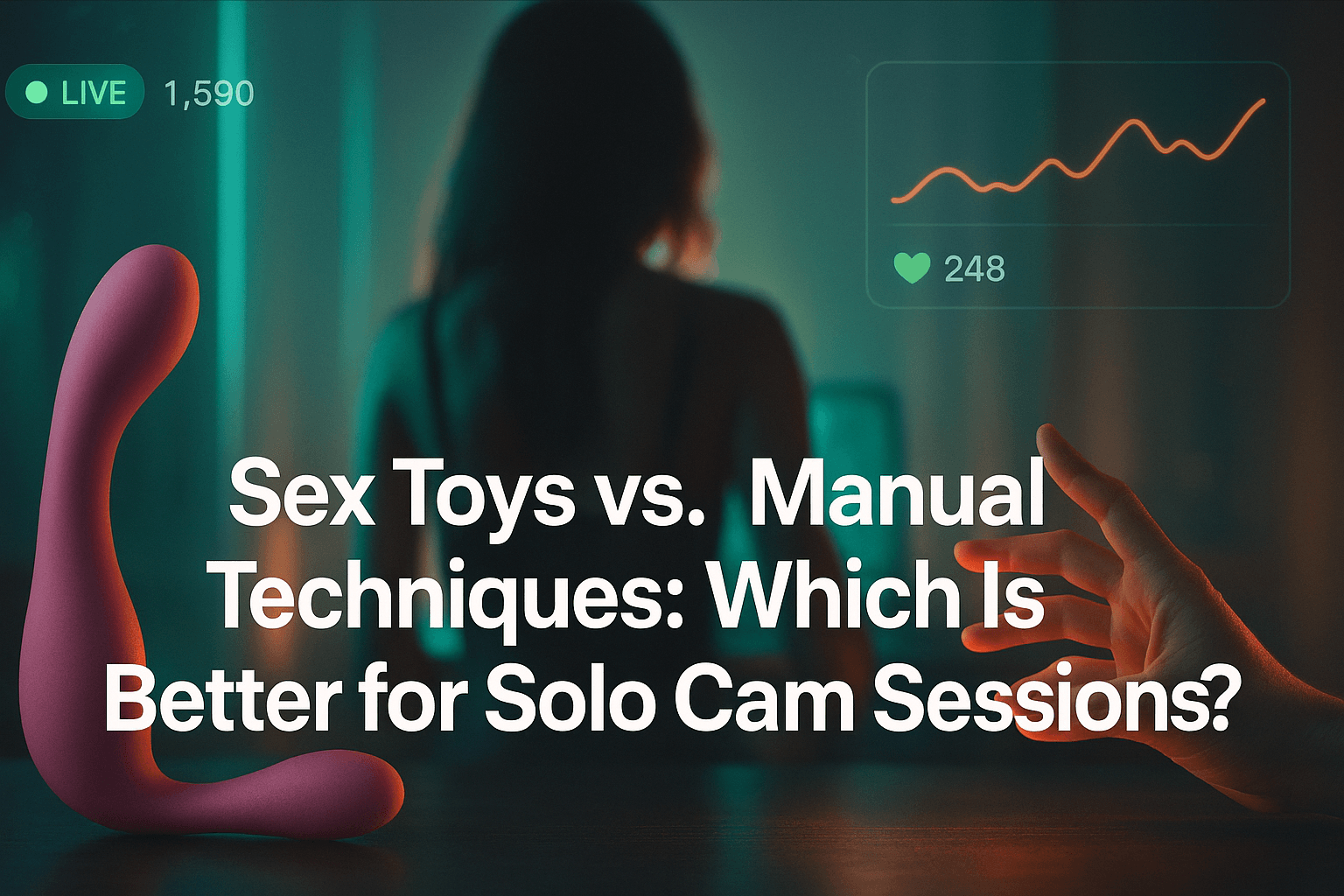
Solo cam sessions have grown into their own category, and with them an old argument: toys or hands. Both sides have a case. Toys bring sensations no hand produces, they look good on camera, and the interactive ones give an audience something to do. Hands give you precision, immediate feedback and nothing between you and what you are feeling. Performers and viewers land on different sides of this depending on what they want out of a session, and most of the strong opinions come from people who have only seriously tried one. This piece works through both, what each does well, where each runs out, so you can decide which belongs in your own sessions rather than defaulting to whichever you started with.
Understanding the Appeal of Sex Toys
Toys widen the range of what a session can contain. Textures, vibration patterns, shapes built for one specific purpose, none of that is reproducible by hand, and that is the entire argument for them. A vibrator, a dildo and an anal toy each do something distinct, and working out which does what for you is half the point of owning more than one. There is also the plain matter of stamina. A toy keeps going at a constant intensity for as long as the battery lasts, which changes what a long session can look like, and hands simply cannot do that without tiring.
On camera they also solve a practical problem: they give the room something to watch and something to talk about. Performers who talk through what a toy does, how it feels, why they chose it, hold an audience far better than performers who use one in silence. It turns a solo act into a conversation. Anyone chasing a particular kink can always find girls who love bdsm, where the toys are half the language of the room.
Trying different toys tends to open up things neither side had considered. Viewers who find interactive bonga cam experiences notice this quickly, because tip-controlled toys hand part of the session to the audience. That is the real shift: the toy stops being an object and becomes the connection between performer and room. It cuts both ways, mind. A session run entirely on tip-controlled hardware can start to feel automated, with the performer reacting to the machine rather than to anyone watching, and viewers notice that faster than most models expect.
Manual Techniques: The Classic Choice
Hands give you control nothing else matches. Pressure, speed, rhythm, all adjustable in the moment, all responding to what you actually feel rather than to a preset someone else designed. Toys are impressive; they are also blunt instruments by comparison. Nothing on the market reads a flinch and eases off a fraction of a second later, and that small correction is most of what makes hands work.
There is a second benefit that takes longer to appear. Spend time on technique and you learn things about your own responses that you had not noticed in years of doing it the quick way. That knowledge shows up on camera, because someone who knows exactly what they are doing is more watchable than someone operating a device. Technique keeps evolving alongside everything else, which is a theme that runs through the evolution of VR in cam sites as well.
Being able to change what you are doing mid-session matters too. Adjusting to your own body and to what the room is asking for keeps a show alive. Whether you are building a full performance or simply want to find hot Indian girls on cam, solid manual technique is what everything else rests on.
Comparative Insights: Toys vs. Manual Techniques
Put side by side, the two answer different questions. Toys deliver intensity and variety, and they photograph well, which is why shows built around them hold viewers who would drift away from a quieter session. There is a reason the busiest rooms usually have something buzzing in them. Toys give a show structure as well: a goal to hit, a level to unlock, something for the chat to organise itself around.
Hands win on control and on closeness. Pressure and pace adjust instantly, and the tactile part is not simulated. For a lot of people that directness is the point, and no amount of vibration settings replaces it. What performers increasingly report, though, is that the argument is false, the strongest sessions use both, switching as the mood turns, and the switching itself is part of the show, because the contrast between a machine's steady pressure and a hand that keeps changing its mind is more interesting than either on its own. That mix is what stands out on platforms like free live adult webcams pinkycams.
The gap between the two is likely to keep narrowing. As the future of live sex trends and predictions sets out, the next round of hardware is aimed at making toys responsive rather than merely powerful, reacting to the room, to tips, to what a performer is doing with her hands at that moment. Personalisation is where this is heading, and it makes the either-or framing look increasingly beside the point.
Conclusion
On sex toys vs. manual techniques, there is no verdict that holds for everybody, and anyone claiming otherwise is describing their own preferences. Some people want the intensity and the variety a drawer full of toys provides. Others want control and directness, and find toys get in the way of both. The sensible answer is to use both and stop treating it as a contest. Try things, notice which sessions you actually think about afterwards, and build from that. Every session is a chance to learn something about your own responses, which improves your own evenings and, if you are performing, gives the room something worth staying for. Mix the two and you may well be surprised which combination turns out to work best. If you have spent years on one side of this, the cheapest experiment available is a single session run the other way, and most people who try it end up keeping something from it.